50s vs Modern Guitar Wiring
The Real Difference in Tone and Control
1 Introduction
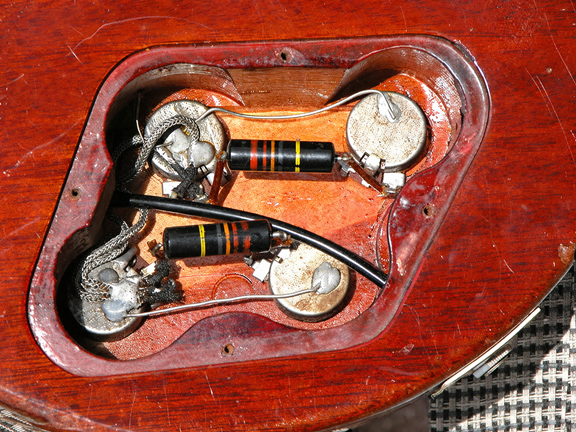
If you’ve ever adjusted your guitar’s volume or tone controls and noticed subtle changes in your sound, you’re hearing the effect of how your instrument is wired. Two of the most common wiring approaches—50s wiring and modern wiring—affect how your controls interact with your pickups.
At full volume, both wiring styles sound nearly identical. The difference becomes apparent when you begin rolling down the volume or adjusting the tone control.
2 The Core Difference
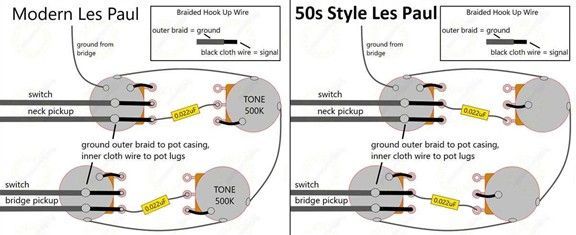
The distinction between 50s wiring and modern wiring lies in where the tone circuit connects relative to the volume control:
- 50s wiring: The tone circuit connects after the volume control.
- Modern wiring: The tone circuit connects before the volume control.
This seemingly minor difference changes how the controls interact with each other.
3 50s Wiring Characteristics
50s wiring creates a more interactive relationship between the volume and tone controls.
- Rolling down the volume retains more high-end clarity.
- Adjusting the tone can slightly affect overall output.
- The controls feel more responsive and interconnected.
This style is often preferred by players who use their volume knob to clean up an overdriven amplifier, as it helps preserve articulation and brightness.
4 Modern Wiring Characteristics
Modern wiring separates the behavior of the volume and tone controls.
- The tone knob operates independently of the volume.
- Lowering the volume tends to reduce high frequencies, resulting in a darker sound.
This happens due to the interaction between the volume control and cable capacitance, which causes treble loss as the signal level decreases.
Modern wiring is widely used because it offers predictable and consistent control behavior.
5 Side-By-Side Comparison
| Feature | 50s Wiring | Modern Wiring |
|---|---|---|
| Volume Roll-Off | Retains clarity | Loses treble |
| Tone Control Effect | Affects volume slightly | Independent |
| Control Interaction | High | Low |
| Ease of Use | More nuanced | More straightforward |
| Best For | Dynamic players | Set-and-forget players |
6 What You Here In the Practice
At full volume: Both wiring styles sound essentially the same.
Rolling down volume:
50s wiring maintains brightness and clarity.
Modern wiring becomes darker and smoother.
Adjusting tone:
50s wiring can slightly reduce output.
Modern wiring primarily changes brightness.
7 Choosing The Right Wiring
50s wiring is ideal if you frequently adjust your volume to shape gain and want to maintain clarity at lower levels.
Modern wiring is better suited for players who prefer stable, independent controls and do not rely heavily on volume adjustments during performance.
8 Optional Modification: Troubled Bleed Circuit
A treble bleed circuit can be added to modern wiring to preserve high frequencies when lowering the volume. This modification provides the independence of modern wiring while reducing treble loss.
9 Conclusion
There is no universally superior wiring method. The best choice depends on how you use your controls. Players who value dynamic interaction often prefer 50s wiring, while those who favor consistency tend to choose modern wiring.